Since leaving the railway keeper’s house, the man sometimes caught himself slowing down before things he would have paid no attention to at the start of his journey.
A worn threshold, the mark of a wheel in the earth, a branch tied to a stake with a scrap of cloth: certain details kept holding him back, especially those he could not fully understand.
On the road he met the Guardian again.
He was in his place, facing the sea.
The man slowed down.
“I think I’m beginning to see rather insignificant things.”
“Is it serious?”
He smiled.
“Not yet.”
The wind rose from the sea and crossed the viewpoint, bringing the chirring of cicadas, a few distant voices and the intermittent sound of cars on the road.
The Guardian let those sounds reach them.
“And what have you heard?”
The man looked at him.
“Heard?”
The Guardian had already turned back to the sea.
He went on.
The road crossed a part of the village farther inland, and after a few minutes he passed an old building.
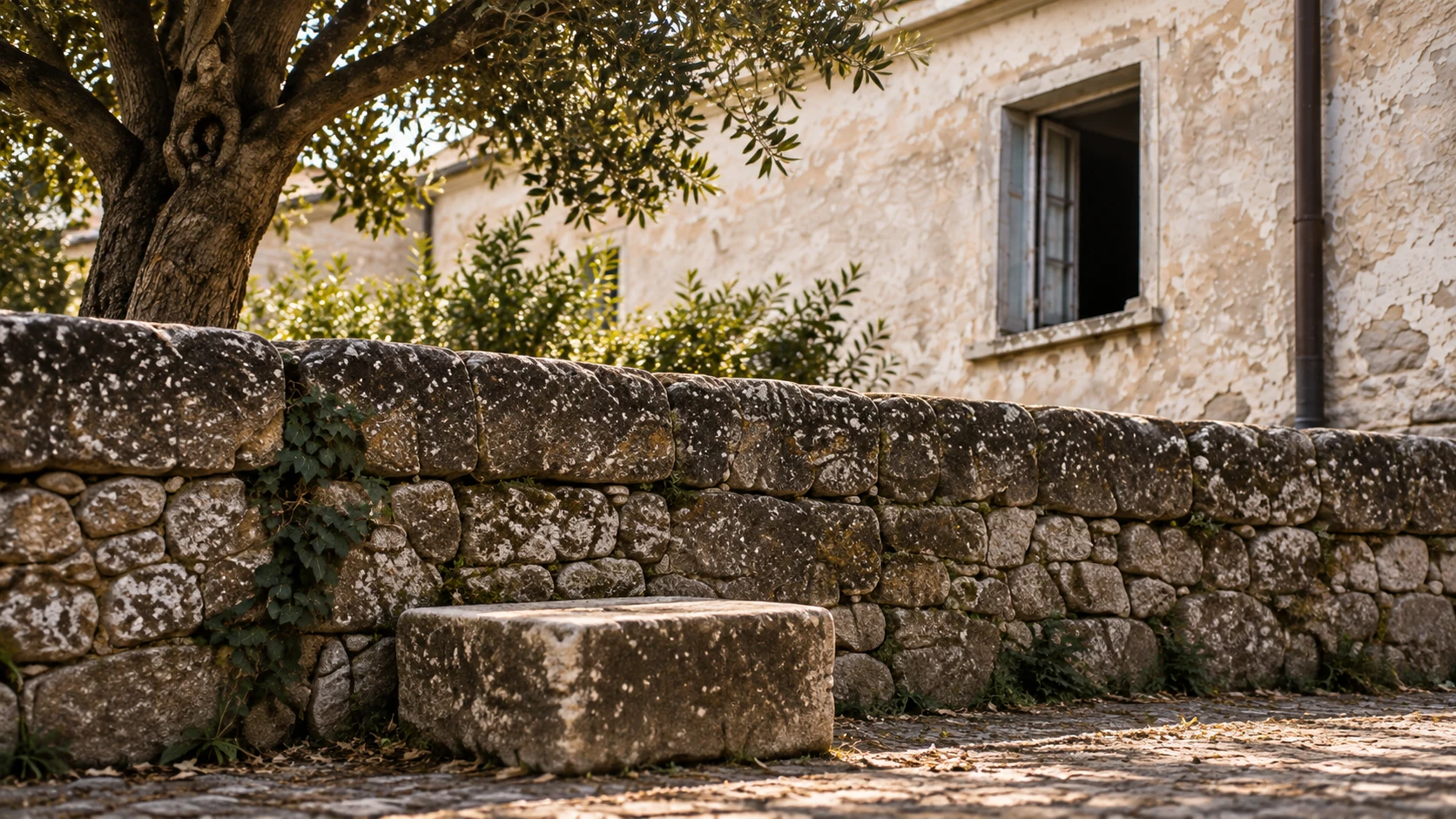
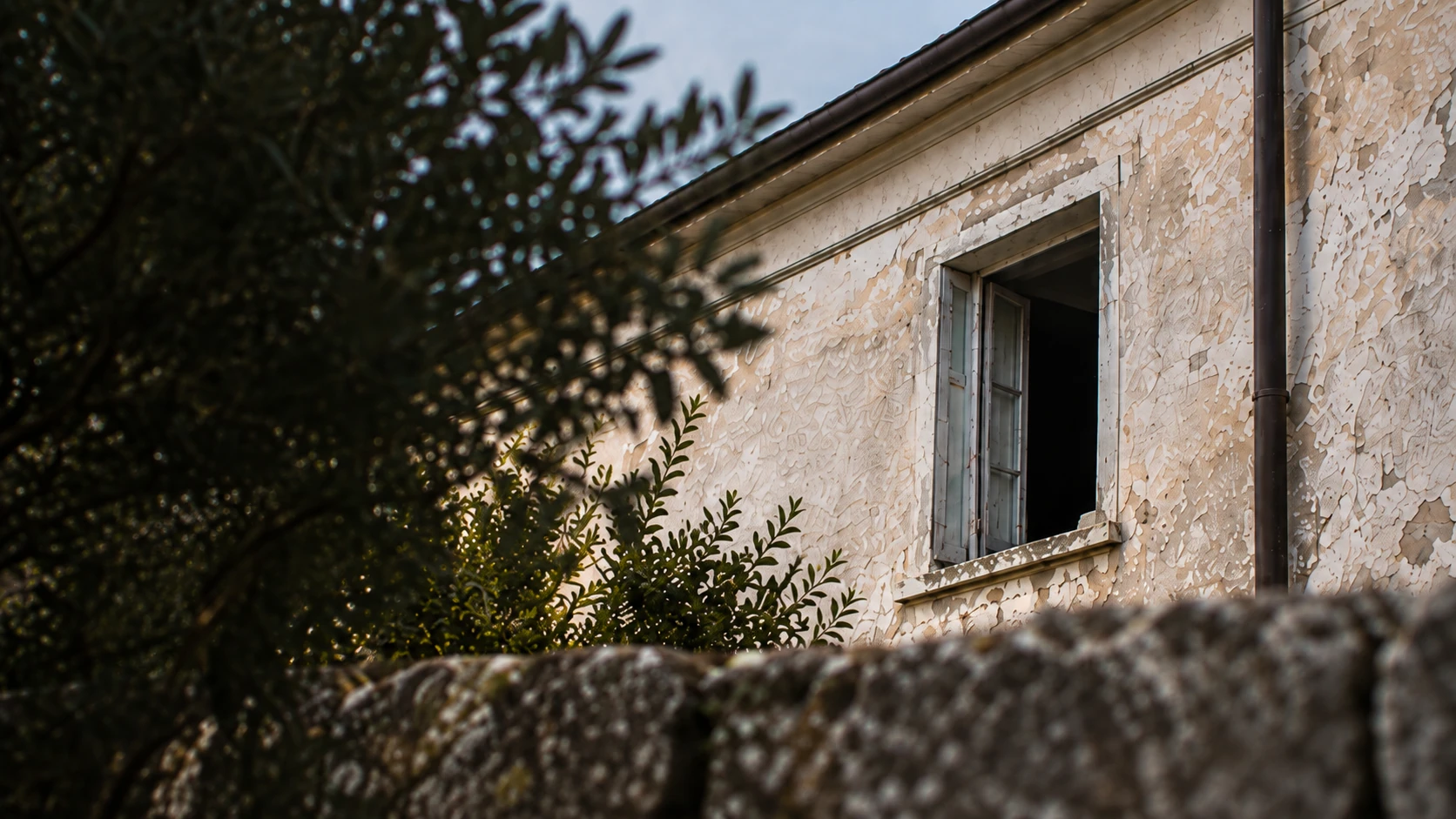
There was nothing that particularly distinguished it from the other buildings along the way. The walls bore the marks of time, some openings had been altered, and behind it ran a low stone wall beyond which the fields began.
He was almost past it when he heard a voice and stopped.
Someone was reading.
The words came faintly, broken by the wind, clear enough to recognise the rhythm of a sentence but too far away to follow its meaning. He looked for the person speaking, until he raised his eyes and saw an open window.
He began to listen.
The wind shifted and the words vanished; a little later they returned, together with the sound of something being moved inside and other voices he could not distinguish.
The man looked at the window again, then went on, not knowing why it had stayed in his mind.
Many years earlier, when that building was still a school, the windows were opened every morning to air the classrooms. In hot weather they stayed open longer; when the wind grew strong, someone got up and closed them. It was one of the many gestures repeated each day that no one had any reason to notice.
The lessons drifted out of one of the back windows: chalk ran over the blackboard, notebook pages were turned, and the children took turns reading aloud. The words crossed the classroom, reached the window, and the wind carried some of them beyond the wall.
There, sometimes, another child sat.
His name was Pietro.
From that spot he could see neither the blackboard nor the desks, and probably could not even make out the faces inside clearly. He could only listen. When the wind carried the words towards him, he stayed still; when it changed direction, he tilted his head a little, waiting for a voice to reach him again.
The teacher first saw him while walking behind the school. Their eyes met, then the teacher continued on his way.
Pietro returned the following day and found the window open. He came back in the days that followed, sitting in the same spot: some mornings he could follow almost all the reading; on others the wind left him only a few sentences, the sound of chalk and the children’s voices.
The teacher went on teaching.
One day the wind grew stronger and the notebook pages began to lift. One fell to the floor; the teacher picked it up, put it on the desk and went to the window.
He closed it.
The voices stayed in the classroom. Pietro listened to the wind a while longer, then got up and left.
The next morning he returned. The school windows were already open, and air moved through the rooms, stirring the curtains and occasionally lifting the corner of a page.
The back window was open too.
Pietro sat down behind the wall, and a little later the lesson began.
It happened again in the days that followed: sometimes the window stayed open all morning; at other times it was closed when the wind became too strong, then reopened with the others. No one ever spoke of what happened on the other side of the wall.
Then, one day, Pietro did not return.
The lessons continued, and every morning, as always, someone opened the windows.
A voice from the place
From the teacher’s diary
15 October
Today I closed the window.
The classroom was quieter.
16 October
I opened it again.
The man read those lines once, then went back to the beginning and read them again.
There was nothing else.
He turned the page to see whether the teacher had written more the following day, but found only notes about lessons and work to assign. He returned to the two dates with the feeling that something was missing.
He looked for Pietro’s name.
It was not there.
He looked at the last sentence again:
I opened it again.
Those words said nothing more.
With his finger still at the edge of the page, he saw again a hand that had almost reached a net and then stopped.
He reread the two lines.
He did not look for an explanation.
He closed the diary.
He returned to the road.
The path back to the viewpoint lay a little farther on. He looked at it, then continued in the opposite direction.
Soon afterwards, on the upper floor of a house, a window stood open. A curtain billowed slowly outwards and fell back, while voices came from inside.
The man walked past.
After a few steps he slowed down.
The words were too far away to make out.
He stayed and listened.