One of the following evenings, the tourist left the viewpoint without asking where to go. He noticed only once he had already taken the road climbing towards Brivadi, while the light slowly withdrew from the houses and the sea behind him lost the day’s last reflections.
On other occasions, something had always preceded his departure: a sentence, a question, a few words that could point him in a direction without really telling him where to go. That evening, though, the Guardian had stayed beside the wall, his gaze turned towards the sea. The tourist had been almost certain he would speak; then he had set off.
He climbed towards Brivadi with no particular destination. By now he knew some of those streets, but not well enough to walk them absent-mindedly: one lane met another, steps rose towards a door, a window stood open above a wall bearing old repairs. Once he would have covered that stretch thinking only of where he was going; now he sometimes slowed even when, at first glance, nothing asked to be looked at.
Perhaps that was precisely why he noticed the doorway.
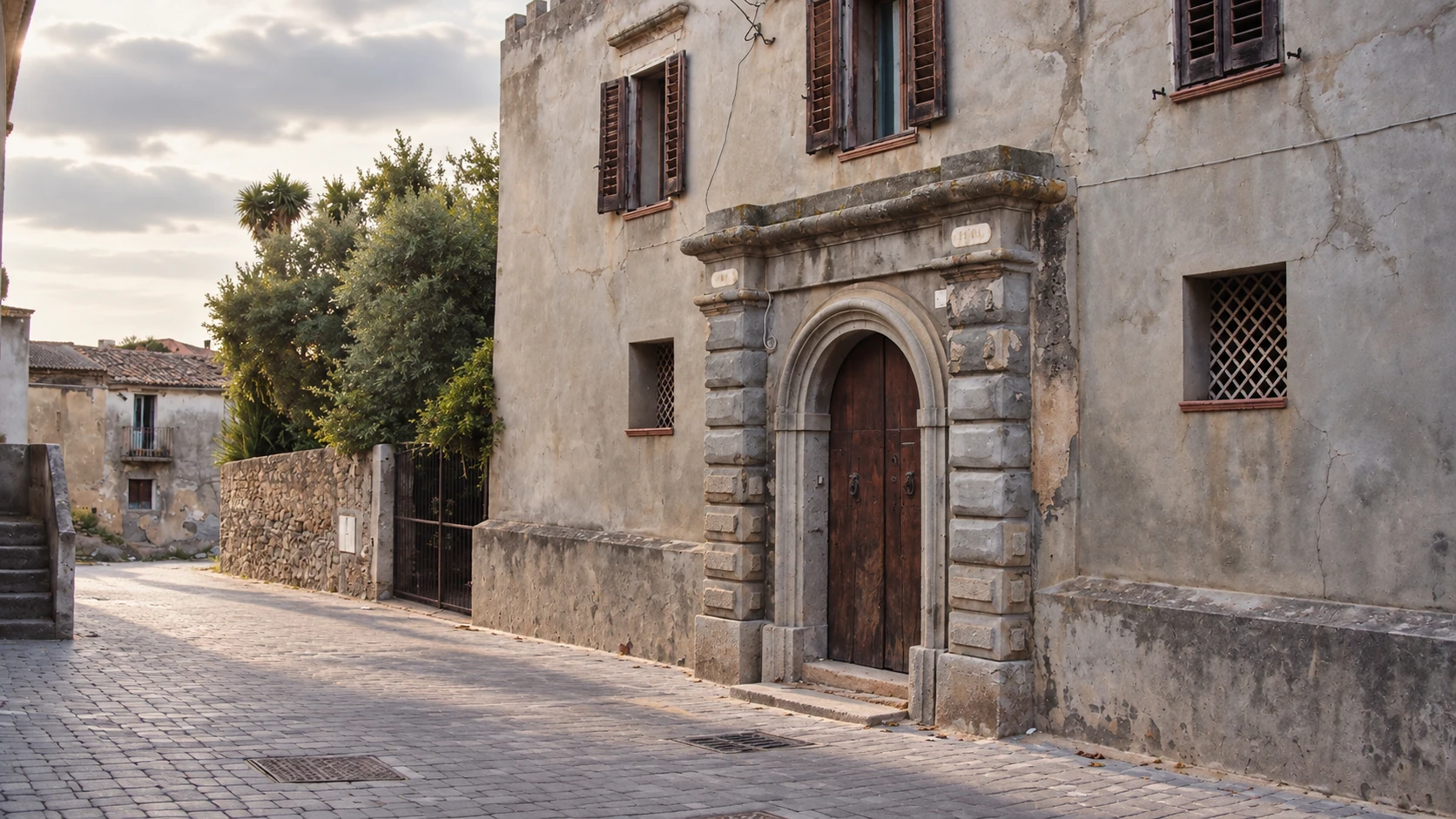
It stood along a narrow street, among façades that seemed unwilling to attract attention. The dark wood bore the marks of time, and the stone framing it gave the entrance an unexpected gravity, as though that threshold belonged to a story larger than the house revealed. No knowledge of architecture was needed to see that someone, long before, had wanted this entrance to stand apart from the others.
He moved closer, studied the façade and returned his eyes to the doorway. Out of habit he took his phone from his pocket, ready to photograph it, but could find no framing that seemed enough.
He lowered his arm.
The photograph could wait.
He knew nothing about that house, and no one had told him it deserved attention. Yet something held him there. It was not simply the doorway’s age or beauty: it was the mismatch between what he saw and the place where he had found it, the feeling that this threshold held a question even before it held a story.
Why an entrance like this, here of all places?
The question came of its own accord. Before walking on, he looked back at the doorway.
• • •
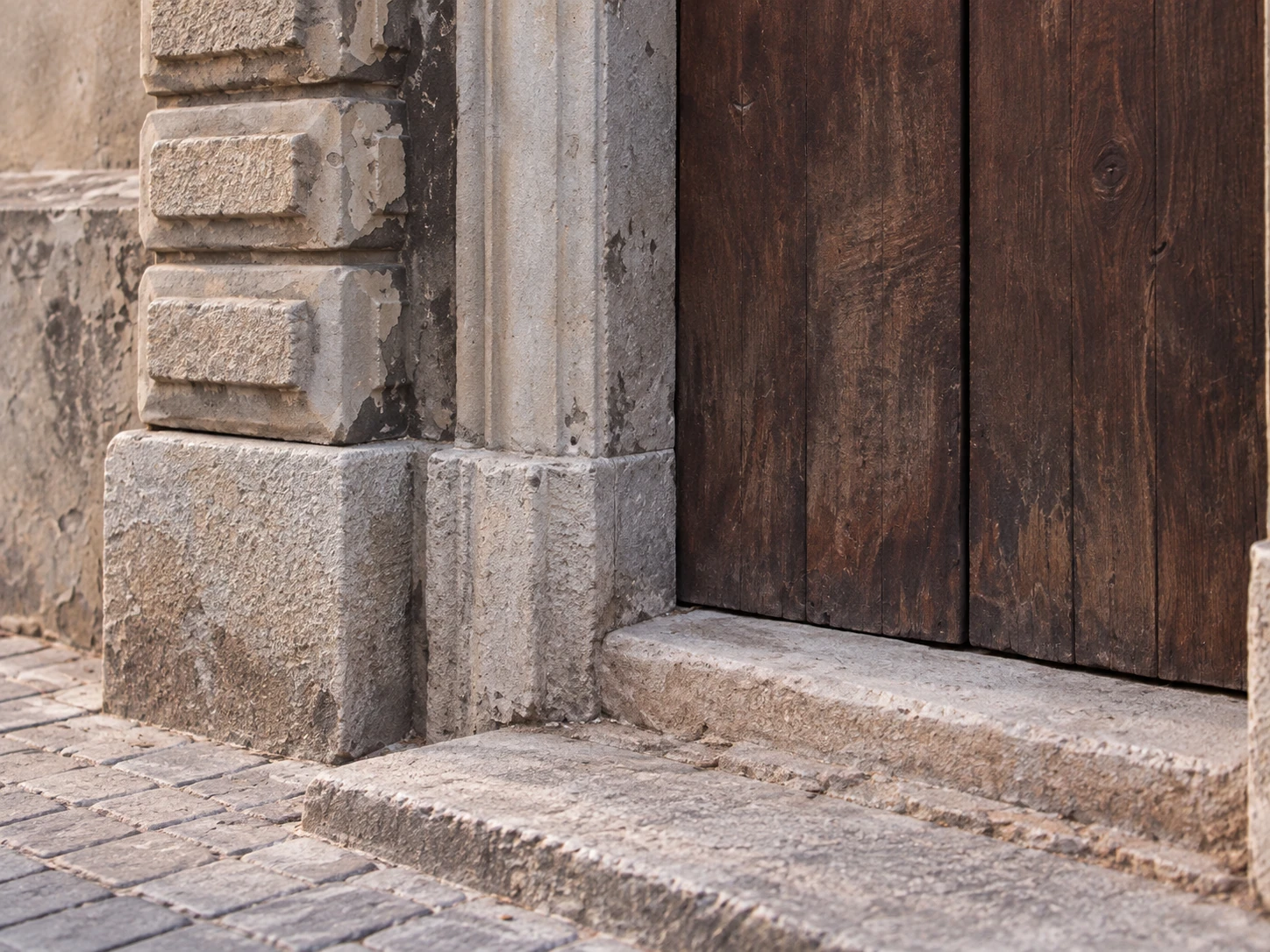
Later he learned that this had been Count Scrugli’s house. He was told that, at a time when Tropea was the centre of life and prestige for many noble families in the area, this nobleman had chosen Brivadi.
It was a simple piece of information, almost ready to become a caption: a count’s name, an old house, an unusual choice. He could have been satisfied with it, kept it alongside the photograph and felt he knew a little more.
That evening, though, the information did not settle the question. It made it larger.
He returned to the doorway after the light had changed and the stone had lost the warmth of the afternoon. From across the street he tried to imagine not the count, about whom he knew too little, but the act of choosing: someone had looked at these places and, though free to live elsewhere, had decided to stay here.
He did not know the reason, and perhaps never would. Strangely, though, that lack did not disappoint him. He looked at the doorway, then at the houses around it. He had no answer, but the question kept holding him there.
What had he seen here that others did not see?
He did not try to complete what he did not know, nor invent an explanation to fill the gap. Instead he looked at the surrounding houses, the road, the distance from Tropea, as though each might add something to the question without necessarily resolving it.
When he began walking again, he realised he had not thought of the Guardian once.
• • •
The Guardian was where he had left him, beside the wall.
The tourist told him about the doorway and the name he had discovered. He spoke of Tropea, of the count who had chosen Brivadi, and of his failure to find out why. As he spoke, he realised he was less interested in reporting what he had discovered than in sharing what that discovery had left open.
When he had finished, he fell silent.
He was used to this moment. Almost every time he returned, the Guardian had asked a question, something that shifted what he had seen and made him look again.
The Guardian went on looking at the sea.
The tourist was certain he would speak. But the silence lengthened without becoming solemn; it was simply a space no one seemed in a hurry to fill.
Then the tourist turned towards Brivadi.
From up there he could not make out the doorway. He saw only roofs, walls and streets slipping between the houses before disappearing, yet he knew that somewhere in that tangle was a threshold before which he had stopped without anyone asking him to.
He kept looking.
His gaze came to rest on a part of the village he had never examined closely before.
Another question came to him.
He felt the Guardian’s presence behind him and almost turned towards him, as he had so many times before.
Almost.
Before him, Brivadi stood motionless in the evening light.
He kept looking.