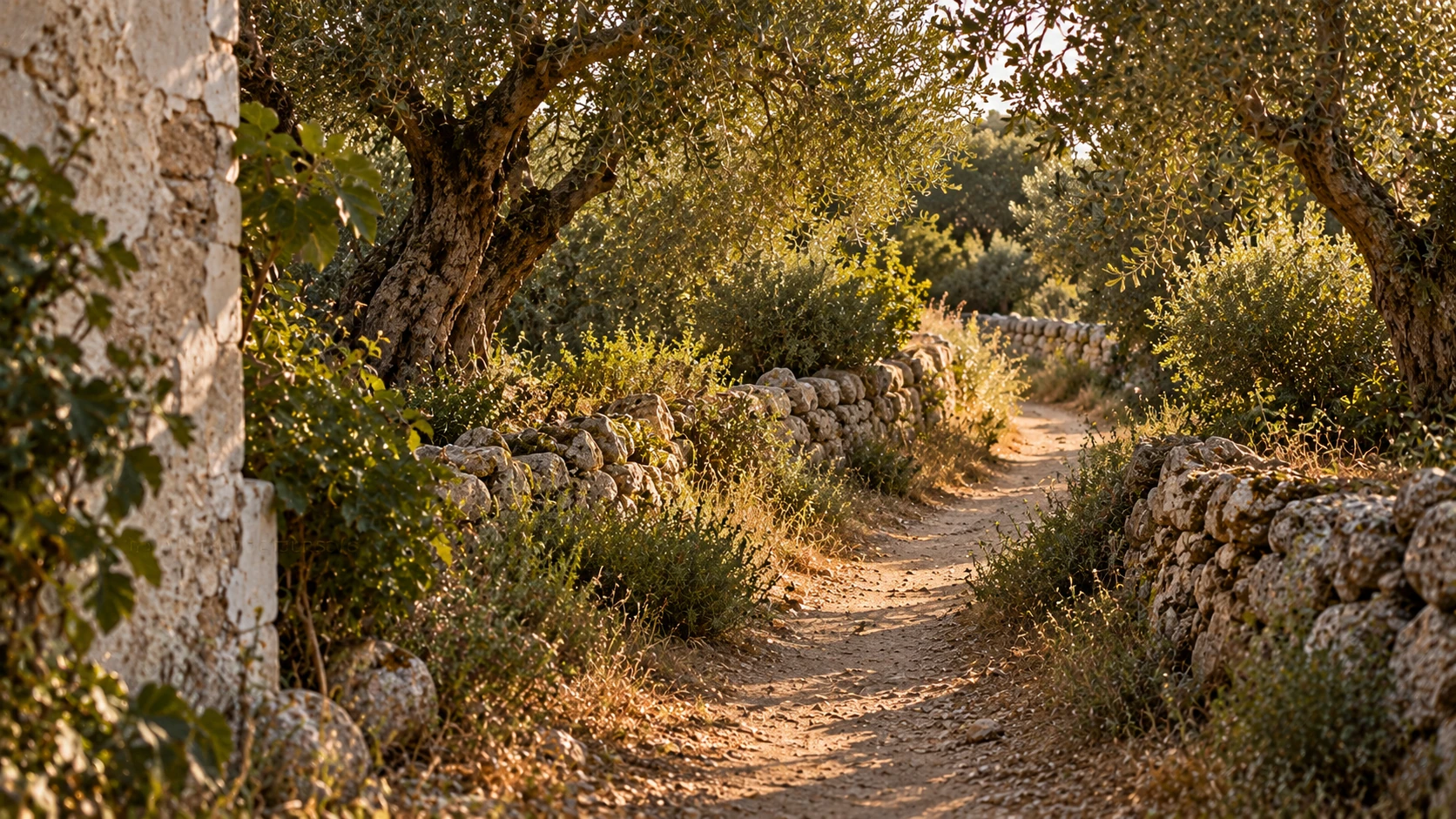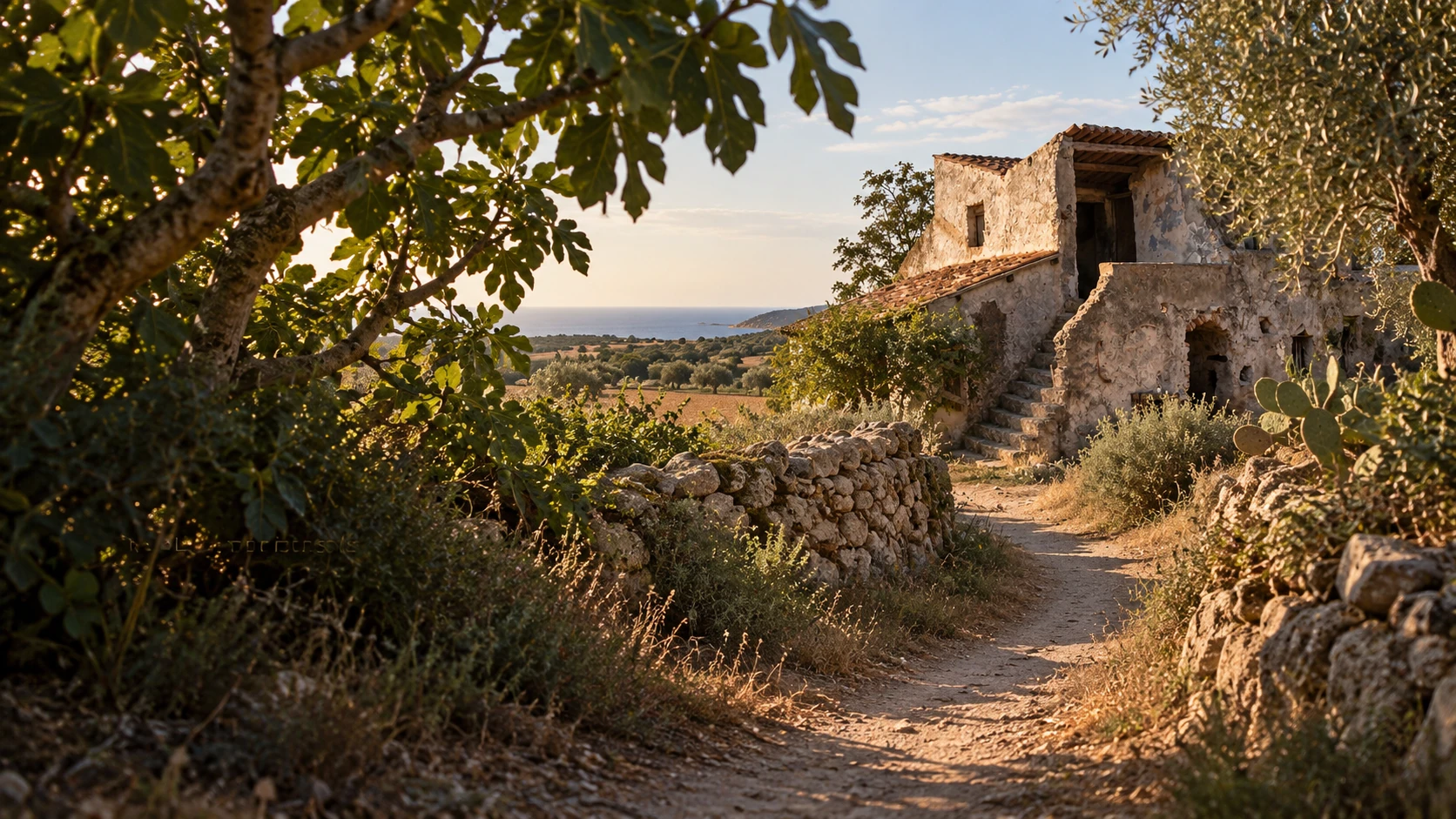
The narrow lane descended between fig trees and Mediterranean scrub, narrow enough that every now and then he had to push a branch aside with his hand. After a few minutes he turned and could still make out the viewpoint and, a little farther on, the outline of the cliff above the sea.
The Guardian had remained where he was.
It struck him as strange only then. They had talked for so long that, without realizing it, he had begun to think of him as a familiar presence; and yet the Guardian had not told him where that road led, nor suggested that he take it. He had chosen it himself.
He went on.
Little by little, the voices from the viewpoint faded away, leaving the cicadas, the sound of his footsteps on the dry earth and, now and then, the sea appearing again through the vegetation, far below.
It was as magnificent as ever, but the camera stayed hanging from his shoulder.
After a bend, the path opened up and an old house appeared before him.
It stood on the promontory, surrounded by cultivated land and trees. Beyond the edge of the fields, much farther below, the sea opened out again all the way to the horizon.
He stopped.
From where he stood, the house and the sea fell almost naturally into the same picture: walls marked by time, dark earth and, beyond them, blue.
He raised the camera.
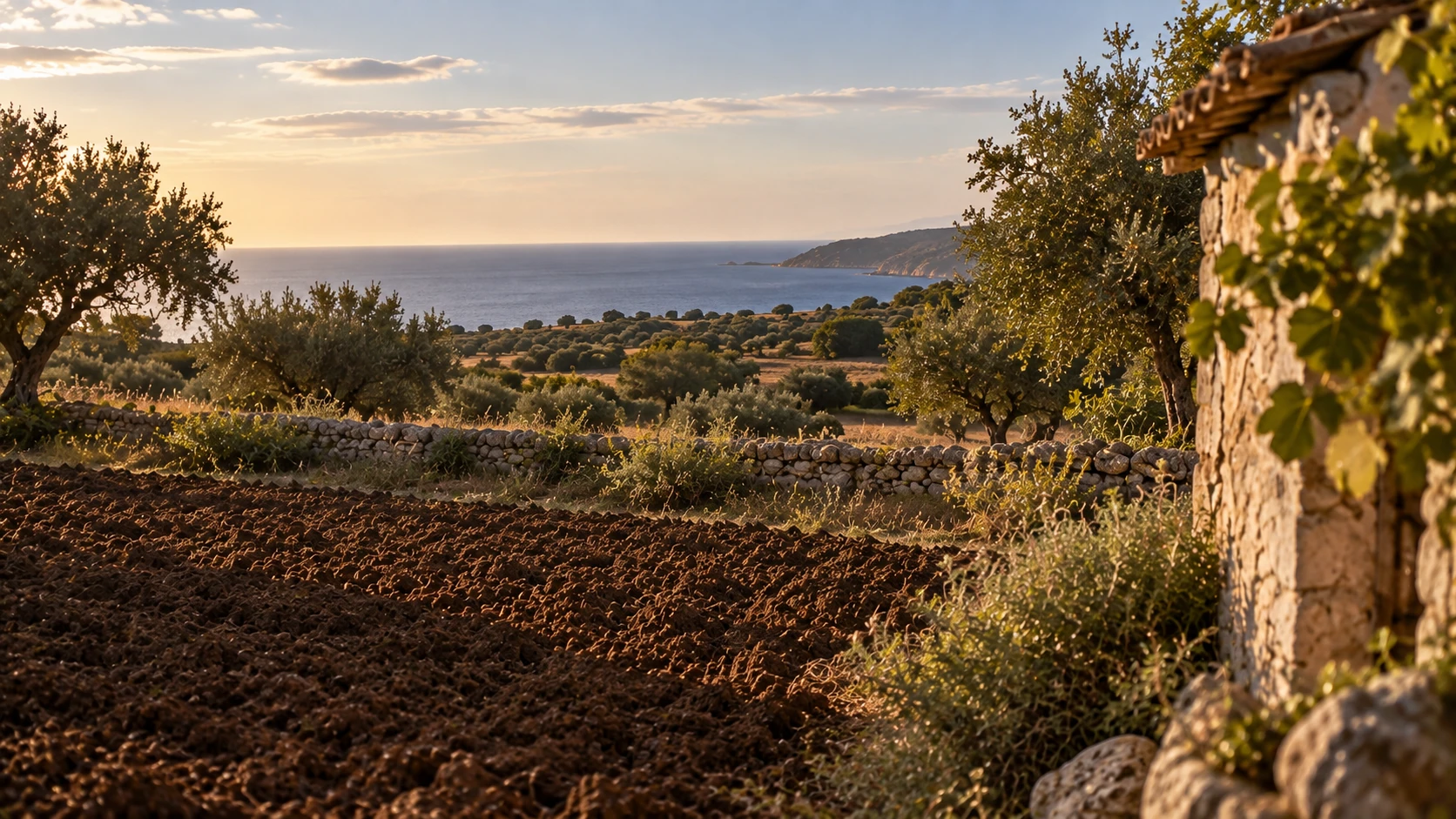
He searched for the best frame, moving toward the edge of the road. Then something made him hesitate.
He lowered the lens.
He looked at the house more closely.
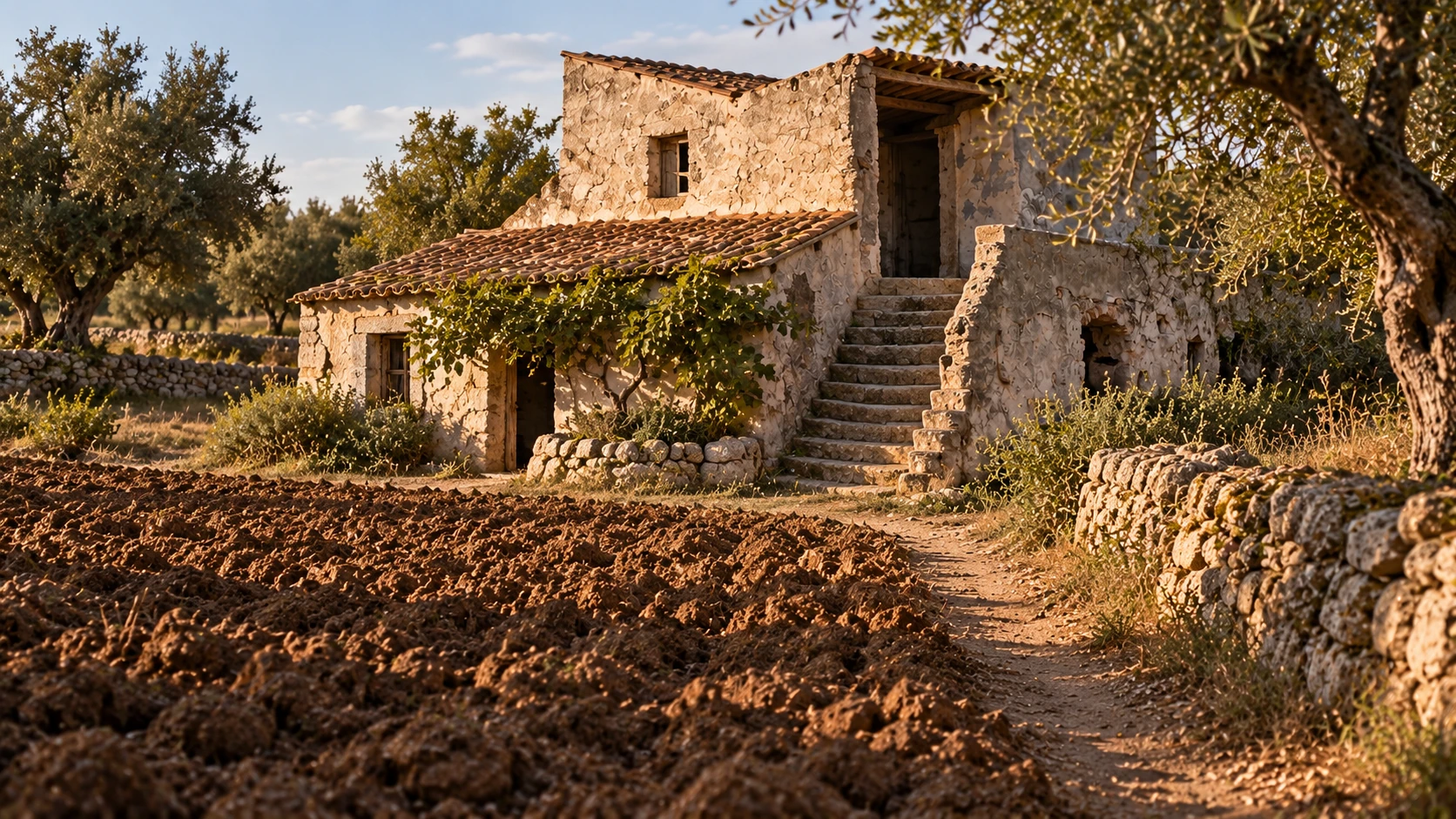
With all that sea before it, he had expected windows opening toward the horizon, a door, some place from which to stop and contemplate it. Instead, the openings seemed to face the other way, toward the fields and the road.
He walked around the building.
The house looked toward the land.
That strangeness held him longer than the photograph he had been seeking.
He stepped closer and began to observe it. The field reached almost to the walls, and the road ended in front of the house as though it had not been laid out to lead someone to a view of the sea, but to bring them back there.
He tried to follow it with his eyes in the direction from which he had come.
He imagined walking it in reverse.
Not as a tourist heading toward something unknown, but as someone returning.
Perhaps at the end of a day in the fields.
He approached one of the openings and looked inside. Time had carried almost everything away, and what remained was not enough to tell him what had happened within those walls.
That was when the questions began.
How many people had lived in that house? Where did they eat? Where did they sleep? Who was the first to leave in the morning, and who was the last to return in the evening?
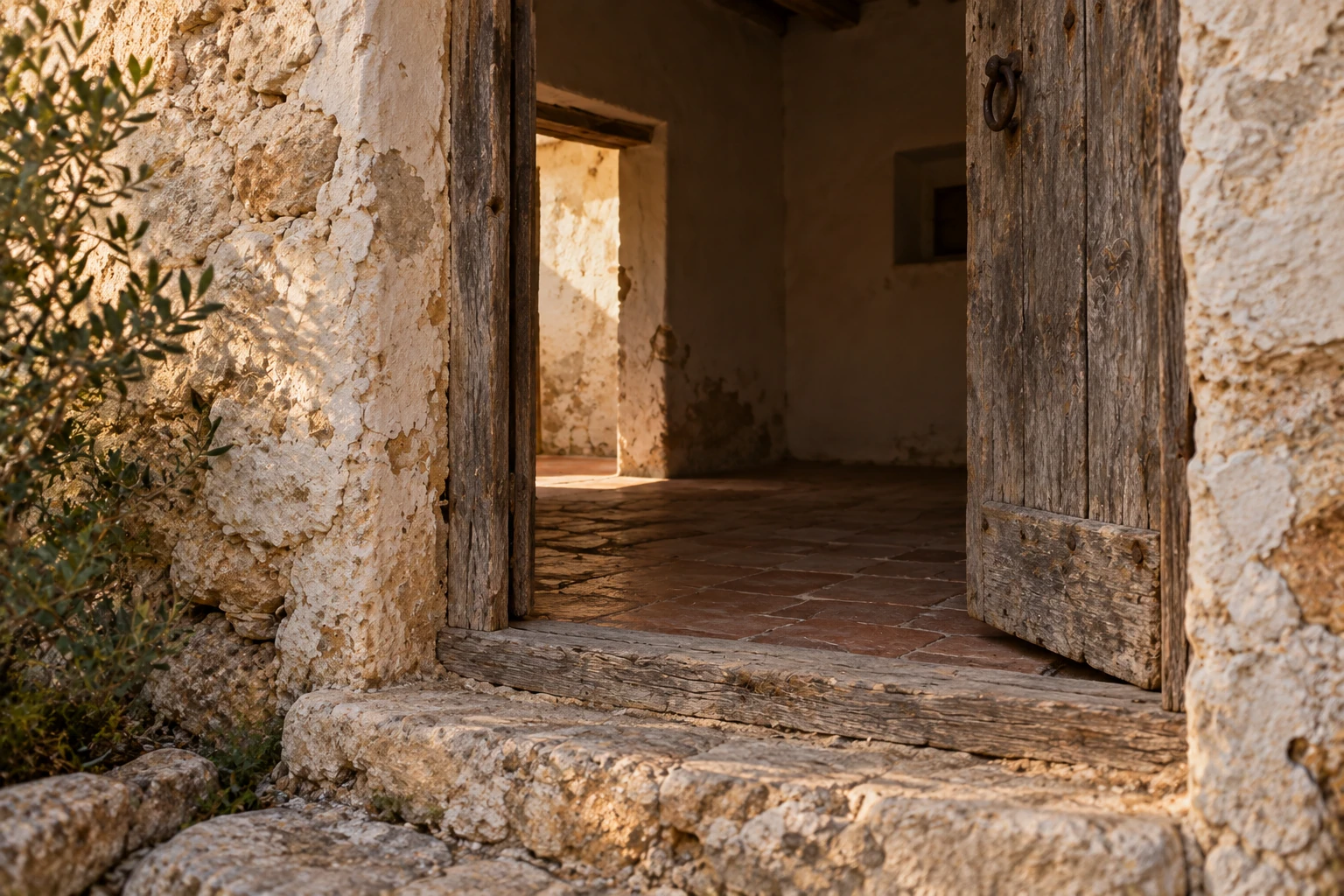
He looked at the road again and tried to imagine someone returning along the same way he had just come. Then someone else appeared on the threshold. A voice called from inside.
He could not make out their faces.
He turned back to the openings, trying to understand what the rooms had been used for, which ones had been added later, where everyday life might have unfolded. Every detail that had once seemed merely old now opened up a possibility.
The more he tried to understand, the less empty the house seemed.
He moved closer still.
He thought of the mornings when that door must have opened just as the sun was rising, of the evenings when someone had closed it again after returning from the fields, of footsteps, tools left somewhere, the voices those walls had heard when no one could have imagined that one day they would fall silent.
He did not know whether it had really happened that way.
And it was precisely what he did not know that held him there.
His hand moved toward his pocket.
The phone was there.
He could have searched for the name of the house, found out who had lived there, perhaps discovered a photograph. He imagined how simple it would be.
Then he looked at the threshold again.
He left the phone in his pocket.
He kept looking.
He was no longer trying to decide whether the house was beautiful. He was looking for the people who were no longer there.
When he took up the path again, the sea opened before him once more, much farther below. The light had changed and the water had deepened in colour. He contemplated it again, as he had done so many times that afternoon.
Then he went on.
After a few steps, he turned.
The sea was still there, beautiful.
But he looked for the house.